Human agency.
Your data. Your permissions.
A meaningful way to leave.
An open protocol for independent people, nodes and services. Common rules. No mandatory centre.

A better Web does not need
a more captive human.
Your data. Your permissions.
A meaningful way to leave.
Our reference environment avoids ads.
Providers disclose their own policies.
Documented interfaces.
Independent implementations.
Participate. Disagree. Build.
No required worldview.
Nothing is added.
The hidden structure is revealed.

A metaphor for wholeness.
Not a belief system required to participate.
SpiritDirection.
SoulConnection.
BodyAction.
A voluntary philosophy. Freedom, ethics and human agency; no required worldview.
02 / PROTOCOLOpen rules for identity, discovery, content and resource exchange.
03 / IMPLEMENTATIONOne implementation for authorised tasks and resources, alongside independent compatible systems.
Civilization OS is the shared horizon — not a finished product. Explore the horizon
Foundation, digital tools, research and culture. Each direction has a current stage, next step and connected projects.
Stewards specifications, discussion and interoperability checks. It does not own the network or hold a general power to switch off other operators’ nodes.
An interface to the workspace: applications, files, AI and permissions. The protocol is not tied to one interface.
A long-term application of open coordination to organisations, communities and physical resources.
Independent addresses, verifiable content versions and voluntary interaction among people, nodes and services over available communication channels.
A service keeps a verifiable identity while each content version has its own hash. Updates are signed; lost, replaced and revoked keys require separate procedures. A key is not a person or a right to govern others.
Home, the optional ID 0, search and bootstrap help participants find each other. They must not become permission authorities: direct addresses, independent directories and a choice of entry points are required.
Discovery is separate from delivery. Internet, LAN, supported mesh and radio links have different limits. Delay-tolerant delivery stores a packet until a route exists; offline access covers locally available data and permitted operations.
A personal node, server or data centre may offer compute, storage or delivery with explicit consent and limits. Price, privacy, result verification and rental termination must be clear. Buying capacity does not buy political authority.
WebV compatibility does not require adopting Vilnism, using TOS, registering with this site or buying a mandatory token. Providers retain control of their own resources.
Critical mass means enough independent operators, replicas, routes, energy and local data. Registration counts do not demonstrate it. A network becomes autonomous within a tested scope when it can lose its initial site, bootstrap or provider and retain the required functions.
Can independent operators still find a known service, verify its version and use available replicas after the original site or directory disappears? Can a separate client join from documentation? These are proofs to obtain, not claims established by this landing page.
Without a channel there is no instant communication. Without a replica there is no available content. A key revocation may not yet have reached an isolated node; shared scarce resources cannot be spent twice. An ordinary HTTPS gateway retains its own DNS and hosting dependencies.
A data centre may be useful and efficient without becoming indispensable. Replicas that share one owner, electricity supply or upstream route may fail together.
HUMANTurn a question into a system.
A question becomes a proposal. A prototype meets human experience. The evidence comes back.
Explore the discussion formatSignals retain their source.
Proposals keep their history.
Humans approve public decisions.
One knowledge loop. No invisible authority. Proposed integration.
Not the loudest opinion.
The clearest path from question to decision.
WEB V / DISCUSSIONInteractive conceptCan a person move their AI, memory and permissions without losing control or becoming locked in?
Explore the concept noteHow do we make identity portable and recoverable without turning every interaction into a permanent public record?
Explore the concept noteWhat pays for creation, moderation and distribution when attention and purchased ranking are not for sale?
Explore the concept noteHow can ordinary devices share useful capacity while their owners keep control of resources, privacy and participation?
Explore the concept noteA preview of the format, not a live forum. Posting and accounts will arrive with the discussion platform.
These founding concept notes are retained for context. Read the current protocol overview for the developed architecture.
A starting point for research,
not a set of adopted standards.
What would the Web look like if human intention, rather than time spent, defined success?
People should understand what a system does, choose how it serves them, and retain a meaningful way to leave. Identity, data and permissions should be legible rather than hidden behind an account.
Convenience can pull decisions back into central services. The work is to make human control usable, including for people who do not want to manage technical infrastructure.
Founding concept · Open for future review · Not an adopted standard
Related direction: The WebV protocolHow can an ordinary computer or supported phone contribute useful services without surrendering control?
A node should have an explicit role, visible resource limits and revocable permissions. Local work should remain useful when the wider network is unavailable. Shared resources must be opt-in.
Battery, bandwidth, availability and trust differ between devices. A phone is not a server, and distributed capacity is not automatically free or reliable.
Founding concept · Open for future review · Not an adopted standard
Related direction: Personal Nodes & ComputeCan identity move between services without forcing people to give every service the same personal information?
Identity should support selective disclosure, explicit consent and recoverable access. People should be able to keep different roles and contexts separate where appropriate.
Recovery, privacy and abuse prevention can conflict. No single key, biometric or identity model should be presented as a complete solution.
Founding concept · Open for future review · Not an adopted standard
Related direction: TOS Wallet conceptCan useful media and social spaces operate without selling attention or purchased ranking?
Value should come from useful tools, services and infrastructure. Creators should choose how their work is shared. Recommendations should serve declared interests and goals, not an undisclosed auction.
Storage, moderation and distribution still cost money. An advertising-free model needs a visible, sustainable way to pay for them.
Founding concept · Open for future review · Not an adopted standard
Related direction: Personal Space & Creator MediaCan a person move their AI, memory and permissions without losing control or becoming locked in?
Personal AI should work within understandable permissions. Important actions need review proportional to their consequences. People should be able to inspect, correct and export relevant memory.
Local models, remote models and sensitive data need different boundaries. Human approval must be meaningful, not a button people are trained to ignore.
Founding concept · Open for future review · Not an adopted standard
Related direction: AI FactoryPersonPersonal tools, data and agency.
CommunityShared knowledge. Voluntary coordination.
CivilizationA research horizon we build toward together.
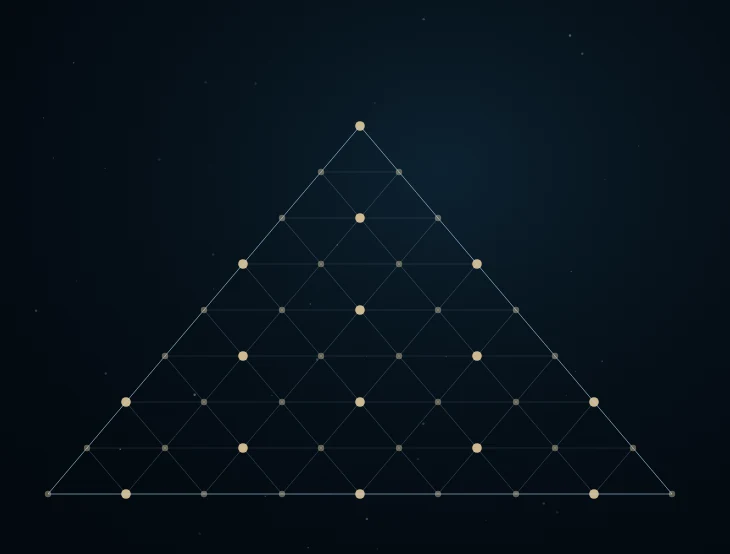 PERSON → COMMUNITY → CIVILIZATION
One self-hosted implementation connecting people, permitted resources and AI. DeskOS provides its workspace interface.
Modules are at different stages. This is a direction map, not a release checklist.
Not a certificate of neutrality.
We are a founding-stage initiative.
Governance must develop in the open.
Who proposes, reviews and decides?
Who pays, and what influence do they have?
Can others disagree, contribute and build?
Published principles, architecture and independent implementation goals.
Compatible clients. Replaceable directories. Recovery after disconnection.
Independent operators, replicas, channels and accountable stewardship.
No. Protocol compatibility is not ideological membership. Basic access must not require a mandatory token; particular resources may have a price and their owner’s terms.
No. Owners decide what to store and relay. Availability depends on permitted replicas, retention periods and payment or voluntary support. Independent publication does not impose a hosting obligation on someone else’s server.
AI acts only within delegated authority. Genesis means permitted deployment and updates on authorised resources. Publishing a rule does not replace adoption by a community; consequential decisions require explanations and a path to appeal.
Constitutional principles, architecture and an implementation direction are published. An open global network, interchangeability of independent clients and all transport modes still require practical validation. This site is an information entry point, not a membership registry or network centre.
Constitutional principles, architecture and an implementation direction are published. An open global network, interchangeability of independent clients and all transport modes still require practical validation. This site is an information entry point, not a membership registry or network centre.
Read the constitutional principles, challenge unclear rules and test whether consent, explanation and exit remain usable. You can use compatible technology without joining a philosophy.
Build independent clients from open contracts. Document addressing, recovery, interoperability, disconnects and reconciliation. A passing integrity check is not proof that a rule is legitimate.
Prepare opt-in pilots for compute, storage or relay capacity. Set resource limits, pricing, privacy boundaries and termination rules. This informational site does not enrol machines or accept payments.
Contribute evidence, reproduce results and improve specifications. The discussion interface is a concept preview; published documents are not automatically adopted rules.
Download the current protocol overview · Markdown ↓
Download full Ukrainian specification · Markdown ↓ · Download Ukrainian test criteria · Markdown ↓
The presentation and overview are companion material. Constitutional text, research notes and local adoption retain their separate authority and status.
Inspired by Vilnism.
Open to independent thought.